
Major Changes in CLAT 2027: Exam Pattern, Syllabus & Preparation Strategy
Listen to this article
Major Changes in CLAT 2027: Exam Pattern & Syllabus
The Common Law Admission Test (CLAT) has undergone significant transformations in recent years. Evolving from a knowledge-based examination to a test that heavily emphasizes analytical skills, comprehension, and strategic thinking, CLAT now seeks to identify candidates with adaptability and critical reasoning abilities.
With CLAT 2027 approaching, aspirants must understand that traditional preparation methods may no longer suffice. CLAT 2027 Exam Pattern shifts, section-wise modifications, and increasing competition demand a smarter, more focused approach.
In this comprehensive guide, we analyze the anticipated changes in CLAT 2027, potential updates to the exam pattern, emerging syllabus trends, and effective preparation strategies to maximize your chances of securing admission to premier National Law Universities (NLUs).
Why Understanding CLAT 2027 Changes Is Crucial
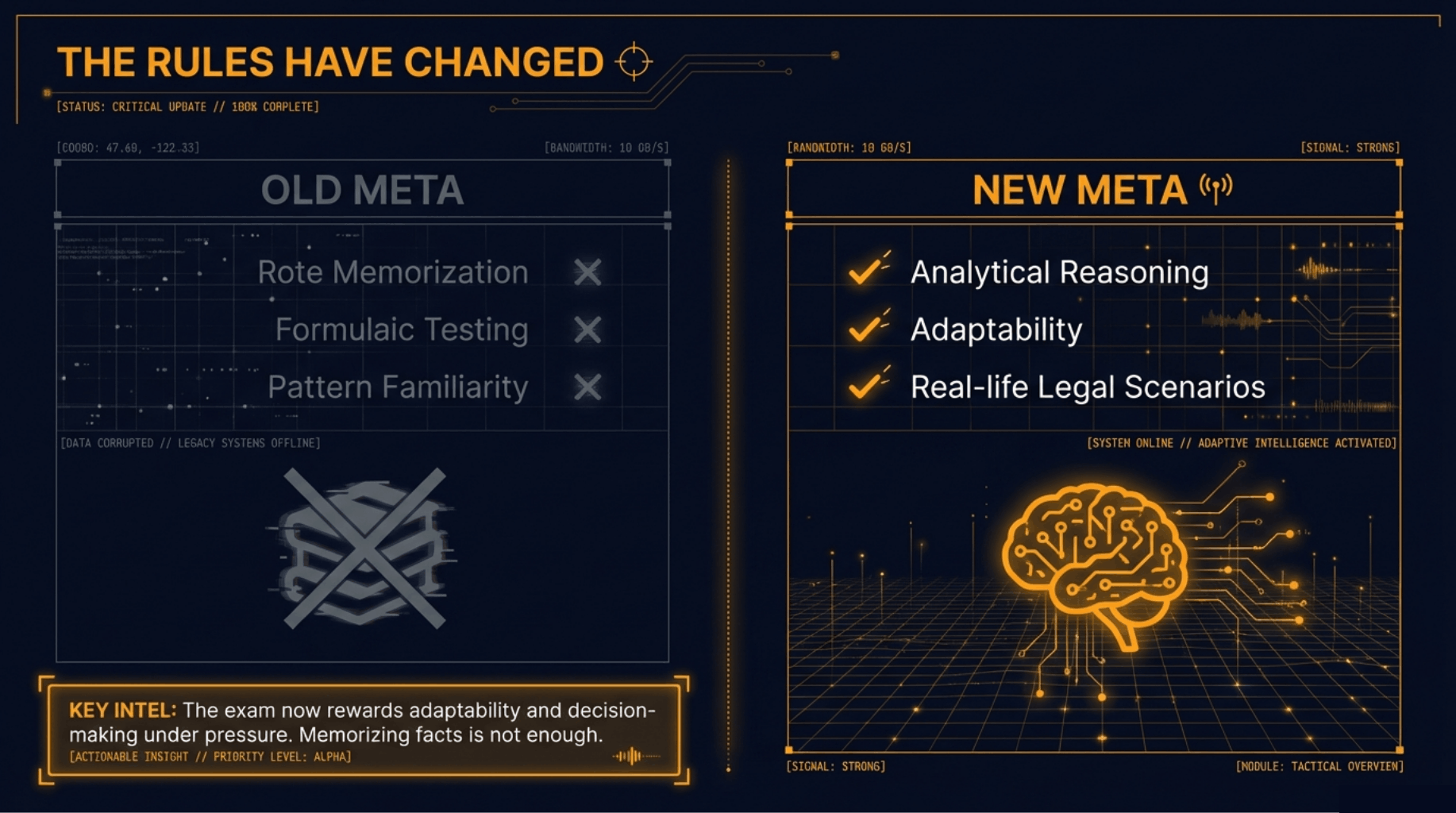
Many students make the critical error of preparing according to outdated exam patterns. However, CLAT has moved away from predictable, formulaic testing. Recent trends indicate a clear emphasis on:
- Analytical reasoning over rote memorization
- Advanced reading comprehension skills
- Decision-making under pressure
- Conceptual clarity in legal principles
- Awareness of real-life legal scenarios
CLAT 2027 is expected to continue this trajectory. Recognizing these shifts early in your preparation journey can provide a substantial competitive advantage.
CLAT 2026: The Redefining Year
CLAT 2026 marked a significant departure from established patterns, offering valuable insights into what aspirants can expect in CLAT 2027.
Key Changes Observed in CLAT 2026
| Area | Key Change | Impact on Candidates |
|---|---|---|
| Logical Reasoning | More analytical questions | Required deeper thinking and problem-solving |
| General Knowledge | Beyond passage-based questions | Tested contextual understanding and analysis |
| Legal Reasoning | Included constitutional concepts | Needed strong legal fundamentals |
| Quantitative Techniques | Heavy DI-based questions | Created time management challenges |
| Overall Approach | Focus on accuracy | Emphasized quality over quantity |
These trends collectively represent a strategic shift in CLAT's design philosophy. Instead of favoring pattern familiarity, CLAT now rewards adaptability, quick thinking, and sustained accuracy under pressure.
Therefore, analyzing CLAT 2026 provides more relevant insights for CLAT 2027 preparation than historical cutoff trends.
How CLAT 2026 Trends Impact Your CLAT 2027 Preparation
| Focus Area | What to Do Now | Why It Matters |
|---|---|---|
| Skill-Based Learning | Build reading, reasoning, analytical thinking, and decision-making speed | CLAT rewards skills, not rote memorization |
| Mock-Based Practice | Treat mocks as learning tools and analyze every test | Improves time management and exam temperament |
| Structured GK System | Follow daily briefs, monthly capsules, and weekly quizzes | Prevents confusion and ensures consistent coverage |
| Personalized Mentorship | Seek expert guidance and performance tracking | Helps in strategy building and continuous improvement |
CLAT 2027 Exam Pattern
The Consortium of NLUs sets the CLAT examination pattern. Understanding the pattern before beginning preparation is essential as it clarifies:
- Core topics and their weightage
- Mark distribution across sections
- Examination methodology
- Question nature and format
Key Changes in CLAT 2027 Pattern
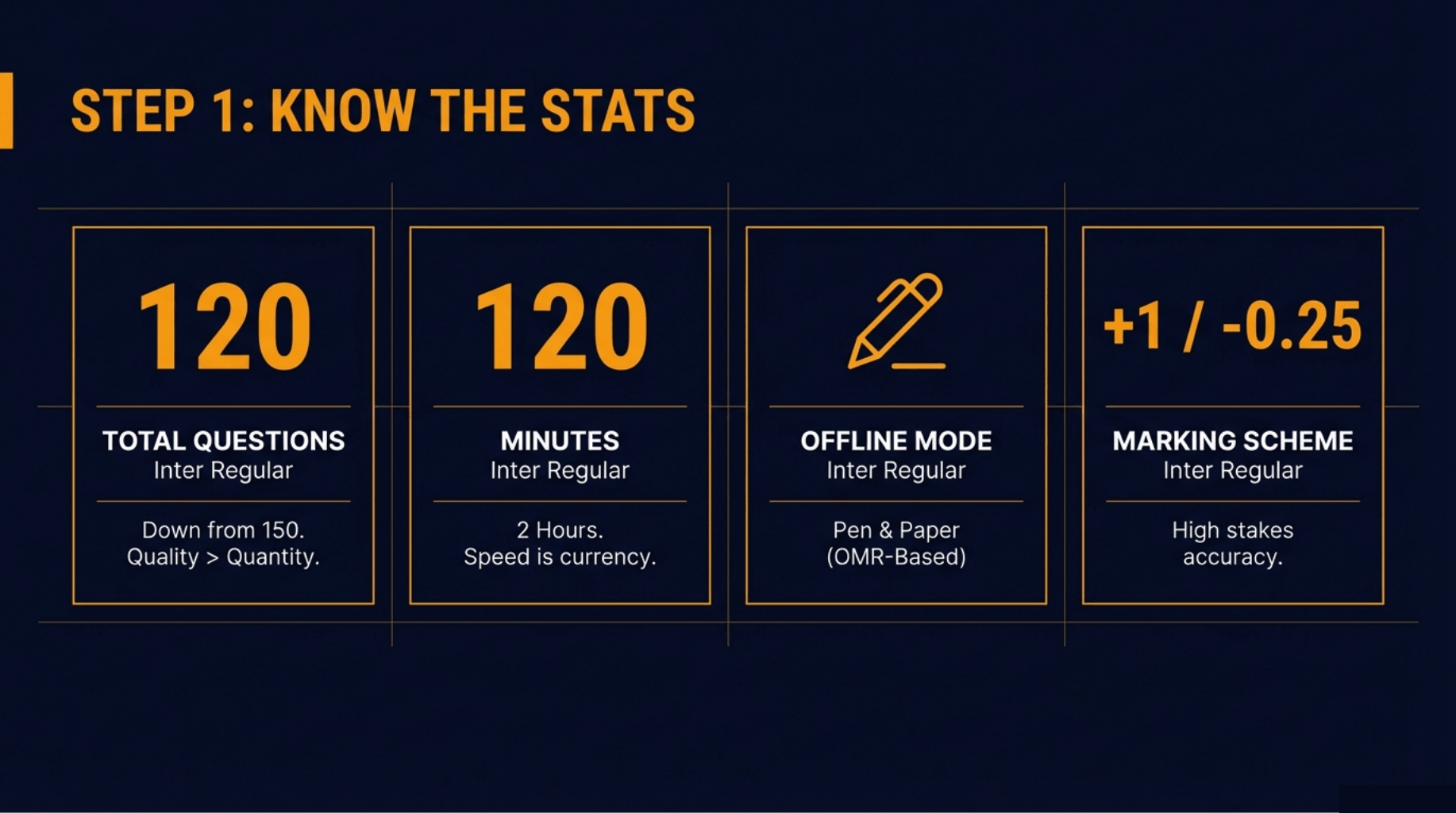
The total number of questions has been reduced from 150 to 120, allowing for more focused, high-quality assessment while maintaining comprehensive coverage.
CLAT 2027 UG Section Pattern
| Section | Approx. Questions | Weightage |
|---|---|---|
| English Language | 22 – 26 | ~20% |
| Current Affairs & GK | 28 – 32 | ~25% |
| Legal Reasoning | 28 – 32 | ~25% |
| Logical Reasoning | 22 – 26 | ~20% |
| Quantitative Techniques | 10 – 14 | ~10% |
Exam Overview
| Feature | Details |
|---|---|
| Total Questions | Approximately 120 |
| Exam Duration | 2 Hours |
| Mode of Examination | Offline (OMR-Based) |
| Question Type | Multiple Choice Questions (MCQs) |
| Marking Scheme | +1 for correct answer, -0.25 for incorrect |
CLAT PG 2027 Exam Pattern (Expected)
The CLAT PG examination follows a distinct pattern designed to assess advanced legal aptitude:
| Section | Approx. Questions | Focus Area |
|---|---|---|
| English & Comprehension | ~30 | Advanced reading, interpretation, critical analysis |
| General Knowledge & Current Affairs | ~30 | Legal news, national/international developments |
| Legal Reasoning & Aptitude | ~40 | Jurisprudence, Constitutional Law, Criminal Law |
| Research Aptitude | ~20 | Legal research methodology, case analysis |
Also Read: About CLAT Exam 2027
Also Read: Online Coaching for CLAT
CLAT 2027 Eligibility Criteria
The CLAT UG examination is designed for 12th-grade students and graduates seeking admission to undergraduate law programs.
Complete Eligibility Requirements
| Criteria | Details |
|---|---|
| Educational Qualification | Passed Class 12 (10+2) or equivalent from recognized board |
| Minimum Marks (General/OBC) | At least 45% aggregate marks |
| Minimum Marks (SC/ST) | At least 40% aggregate marks |
| Appearing Candidates | Students appearing for Class 12 exams in 2026 are eligible |
| Age Limit | No upper age limit |
| Important Note | Failure to submit Class 12 passing proof at admission leads to candidature cancellation |
Documents Required for CLAT 2027 Application
| Document | Description |
|---|---|
| Photograph | Recent front-facing passport-size photo with plain background |
| Signature | Scanned signature of the candidate |
| Category Certificate | Certificate for SC/ST/OBC candidates (if applicable) |
| Disability Certificate | Valid PWD certificate issued by competent authority (if applicable) |
| BPL Certificate | Certificate for candidates under BPL category (if applicable) |
Special Considerations
- Reservation policies apply as per government norms (more details here)
- Foreign nationals have separate admission quotas
- Persons with disabilities receive reasonable accommodations
CLAT 2027 Syllabus Breakdown
CLAT evaluates overall aptitude rather than specific legal knowledge, emphasizing critical thinking, analytical reasoning, and language proficiency.
Section-Wise Detailed Syllabus
| Section | Key Topics Covered | Skills Tested |
|---|---|---|
| English Language | Reading comprehension, grammar, vocabulary, sentence correction | Language proficiency, reading speed, interpretation |
| Current Affairs & GK | Static GK, national/international events, legal updates | Awareness, analytical understanding, contextual thinking |
| Legal Reasoning | Legal principles, hypothetical situations, landmark judgments | Application of rules, logical interpretation, legal aptitude |
| Logical Reasoning | Analytical reasoning, arguments, assumptions, critical reasoning | Logical thinking, problem-solving ability |
| Quantitative Techniques | Basic arithmetic, algebra, geometry, data interpretation | Numerical ability, accuracy, calculation speed |
How CLAT Tribe Prepares Students for CLAT 2027 Changes
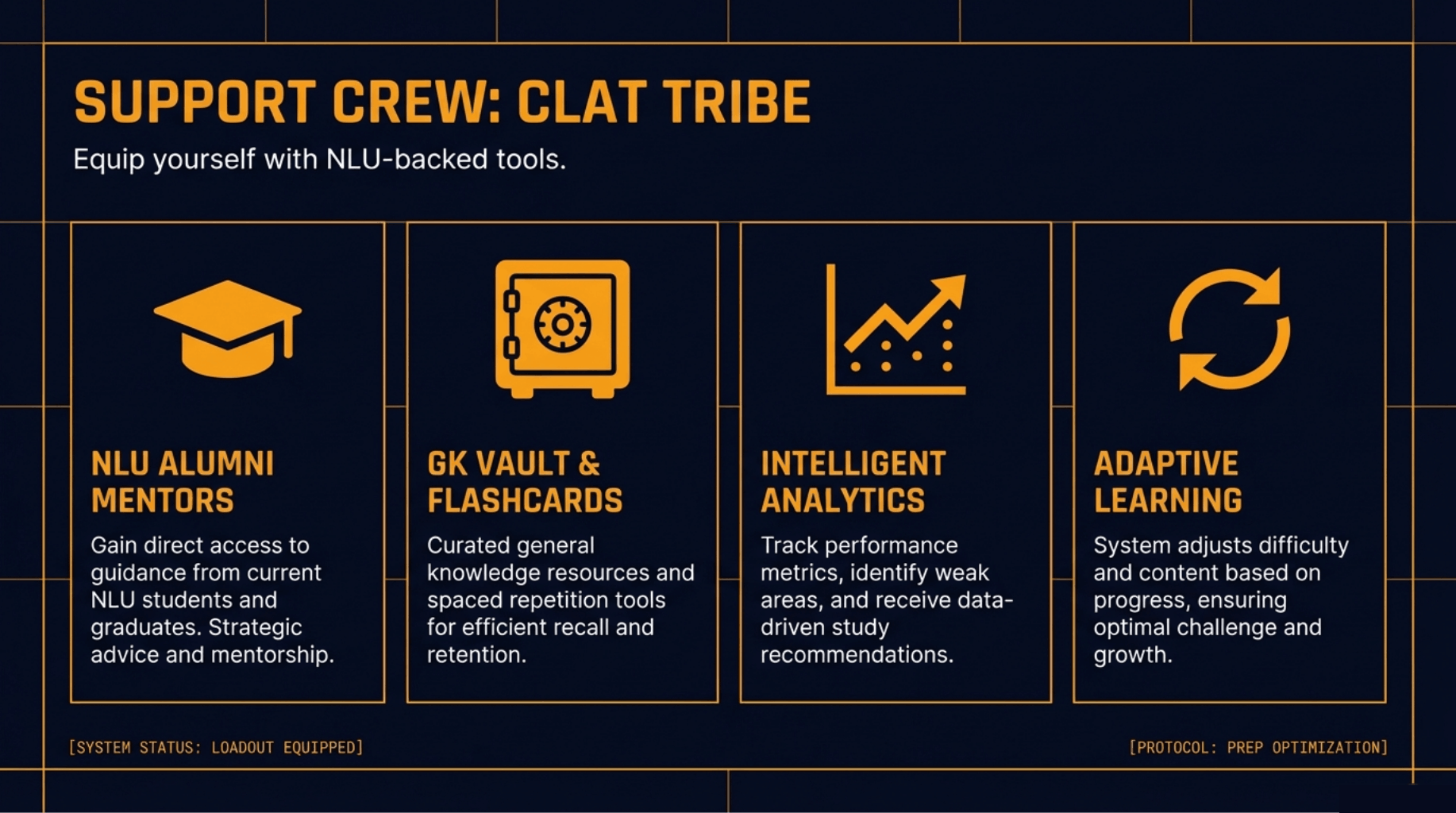
At CLAT Tribe, we equip students for CLAT's dynamic nature through:
Expert Guidance
- Mentorship by NLU & IIM alumni with proven success records
- Personalized feedback on performance and improvement areas
Comprehensive Study Material
- GK Capsules & GK Vault with updated content
- Elite GK Flashcards for quick revision
- Section-wise study modules aligned with latest patterns
Advanced Assessment Systems
- Intelligent mock test analysis by previous rank holders
- Performance tracking systems with detailed analytics
- Adaptive learning paths based on individual progress
Strategic Learning Approach
- Strategy-focused sessions on exam-taking techniques
- Time management workshops for optimal performance
- Psychological preparation for exam-day pressure
We prepare students for CLAT's future, not its past, ensuring they remain ahead of evolving trends. Explore CLAT Resources: Get Your CLAT 2027 Starter Kit Explore CLAT GK Vault
Conclusion: Navigating CLAT 2027 Successfully
CLAT 2026 clearly demonstrated that the examination is in a state of continuous evolution. While CLAT 2027 may not introduce radical structural changes, it will likely refine how skills are assessed, placing greater emphasis on analytical abilities, contextual understanding, and adaptive thinking.
Success in CLAT 2027 will depend on:
- Early adaptation to changing patterns
- Strategic preparation aligned with new trends
- Consistent practice with quality material
- Psychological readiness for examination challenges
Candidates who proactively adjust their strategies will maintain a competitive edge in an examination designed to reward flexibility over familiarity.
Frequently Asked Questions (FAQs)
1. What major changes are expected in CLAT 2027?
CLAT 2027 is anticipated to emphasize analytical legal reasoning, reading comprehension, concept-based general knowledge, and logical decision-making over rote memorization.
2. Will the CLAT 2027 exam pattern be different?
The overall structure will likely remain consistent, but questions will become more passage-based, analytical, and application-oriented across all sections.
3. Is the difficulty level of GK in CLAT 2027 rising?
Yes. General Knowledge is transitioning from direct factual questions to context-based, analytical questions, particularly focusing on legal, economic, and social issues.
4. Will there be a return of static GK and grammar in CLAT 2027?
Experts suggest that some static GK and grammar questions might reappear in comprehension-based formats, testing application rather than recall.
5. How to prepare for the changes in CLAT 2027?
Focus on daily reading, structured GK preparation, regular mock test analysis, conceptual learning, and mentorship-based guidance.
6. Are online coaching platforms better for CLAT 2027?
Yes. Reputable online platforms offer flexible learning schedules, updated study materials, test-driven approaches, and personalized guidance aligned with evolving examination trends.
7. When is the right time to start preparing for CLAT 2027?
Ideal preparation begins in Class 10 or 11 to develop analytical and reading skills early, allowing sufficient time for comprehensive preparation.
8. Does CLAT 2027 necessitate previous legal knowledge?
CLAT primarily tests reasoning and legal application abilities rather than prior legal study. Conceptual understanding matters more than factual recall.
9. How much do mock tests matter in CLAT 2027 preparation?
Mock tests are crucial for developing examination temperament, identifying improvement areas, enhancing time management, and adapting to pattern changes.
10. How does CLAT Tribe assist in CLAT 2027 preparation?
CLAT Tribe provides NLU-backed mentoring, advanced mock test evaluation, comprehensive GK resources, flashcards, and personalized performance tracking aligned with CLAT 2027 requirements.
For the latest updates and official notifications, always refer to the CLAT Consortium website.