CLAT 2027 Free Resources: Your Complete Starter Kit to Crack the Exam
Listen to this article
CLAT 2027 Free Resources: Your Complete Starter Kit to Crack the Exam
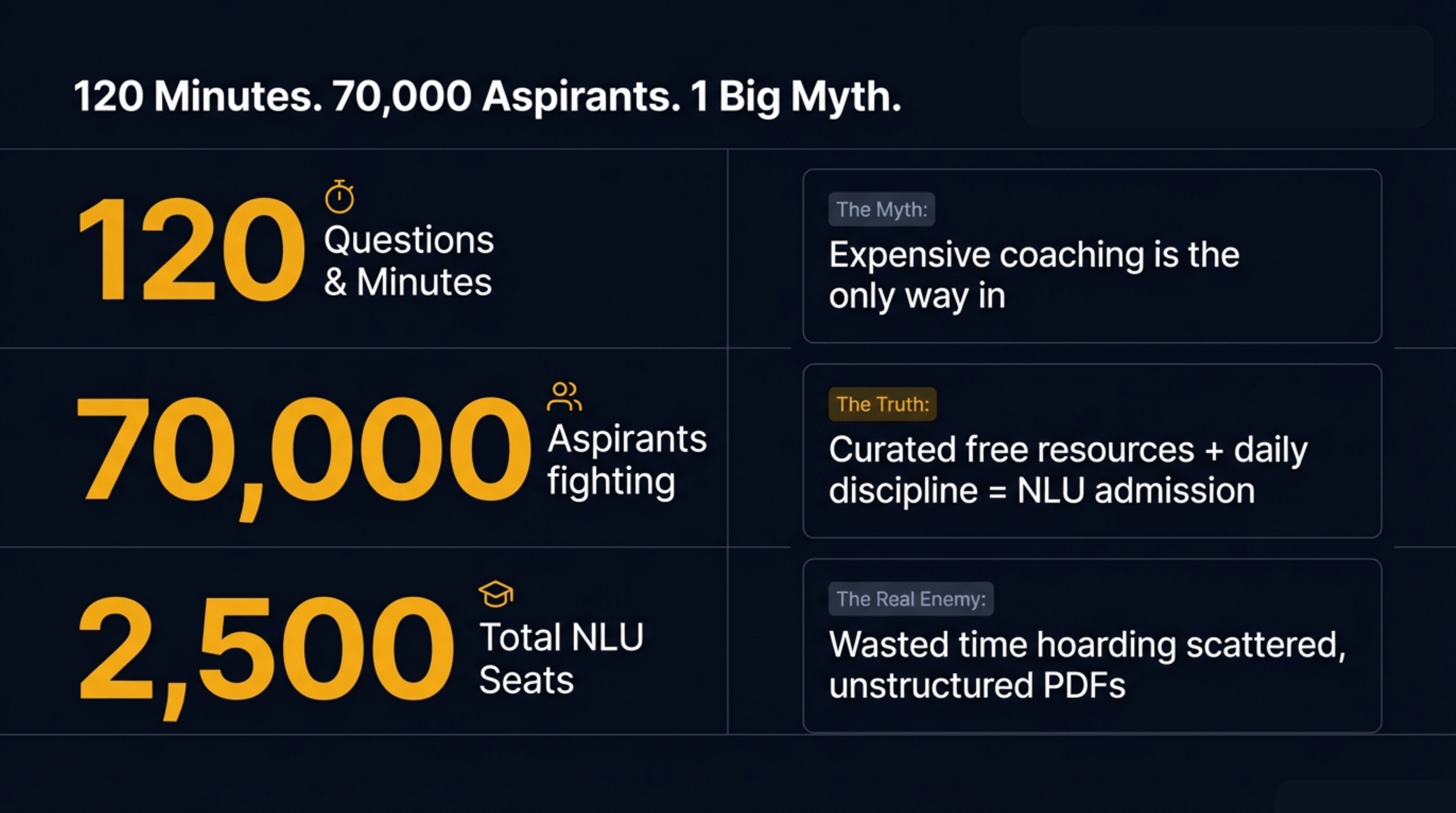
120 questions. 120 minutes. Over 70,000 aspirants fighting for roughly 2,500 NLU seats. The numbers are brutal — but here's what most students get wrong: they think expensive coaching is the only way in. It isn't. The right CLAT 2027 free resources, used with discipline, can take you from zero prep to a competitive score. This post gives you every free tool, material, and strategy you need — plus CLAT Tribe's free Starter Kit that puts it all in one place.
Already decided to start? Grab CLAT Tribe's free CLAT 2027 Starter Kit → clattribe.com/clat-2027-starter-kit
Why Free Resources Are Enough to Begin CLAT 2027 Prep
Can you actually crack CLAT using free study material? Yes — if you pick the right ones and follow a system.
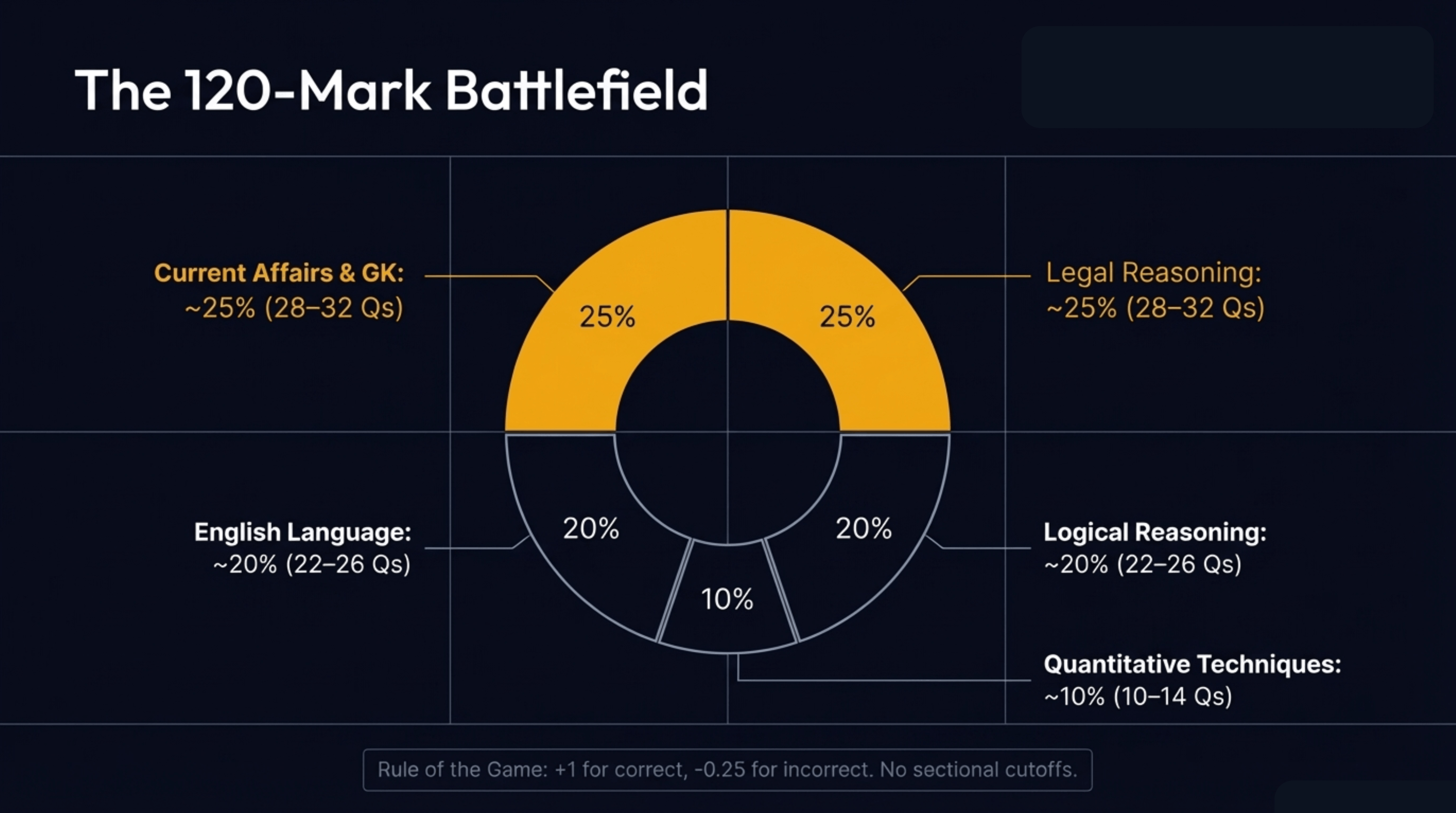
CLAT isn't a knowledge-dump exam. It tests comprehension, reasoning, and your ability to process information under pressure. That means the core skills — reading speed, logical thinking, GK awareness — can all be built with free materials. The exam has five sections: English Language, Current Affairs & GK (25% weightage — roughly 28–32 questions), Legal Reasoning, Logical Reasoning, and Quantitative Techniques.
The real cost of CLAT preparation isn't money — it's wasted time on scattered, low-quality material. Students spend weeks collecting random PDFs, watching unstructured YouTube playlists, and reading newspapers without knowing what's exam-relevant.
That's exactly why a curated starter kit matters more than a pile of free downloads. It gives you structure. And structure is what separates a casual reader from a serious aspirant.
What's Inside CLAT Tribe's Free CLAT 2027 Starter Kit?
CLAT Tribe's Starter Kit is designed as the single entry point for any student beginning CLAT 2027 preparation — whether you're in Class 10, 11, or early 12th.
The CLAT 2027 Starter Kit includes:
- Complete previous year question papers with official answer keys and detailed explanations — covering multiple recent CLAT papers so you understand the real exam pattern, not a watered-down version.
- Section-wise strategy breakdowns — how to approach English comprehension passages, legal reasoning sets, and GK questions with a method, not guesswork.
- A structured starting roadmap — step-by-step guidance on what to study first, how many hours to dedicate daily (2–3 focused hours is enough for beginners), and how to build momentum without burning out.
- Access to CLAT Tribe's GK ecosystem — a preview of the GK Capsules, Smart Flashcards (1,200+ verified facts), and the CLAT GK Vault that thousands of aspirants already use.
The kit was built by the same team behind IPM Careers — the coaching brand that produced IPMAT 2025 AIR 1 and AIR 7. They've applied that same rank-focused framework to CLAT.
Get instant access → CLAT 2027 Starter Kit
The 5 Sections of CLAT 2027: What Free Resources You Need for Each
Understanding the exam pattern is step one. Here's what each section demands and which free CLAT 2027 resources actually help.
| Section | Questions (Approx.) | Weightage | What's Tested | Best Free Resource Type |
|---|---|---|---|---|
| English Language | 22–26 | ~20% | Reading comprehension, vocabulary, grammar | Newspapers, editorial reading, word lists |
| Current Affairs & GK | 28–32 | ~25% | National/international affairs, arts, culture | Daily GK capsules, monthly digests, flashcards |
| Legal Reasoning | 28–32 | ~25% | Legal principles applied to fact scenarios | Constitution basics, landmark case summaries |
| Logical Reasoning | 22–26 | ~20% | Analytical reasoning, passage-based logic | Logic puzzles, critical reasoning practice sets |
| Quantitative Techniques | 10–14 | ~10% | Basic maths, data interpretation | Class 10 NCERT, percentage/ratio practice |
Total: 120 MCQs in 120 minutes. Each correct answer = 1 mark. Each wrong answer = −0.25 marks. No sectional cutoff — your overall score determines your NLU allotment.
Related Blog:Why CLAT Tribe
Free CLAT 2027 Resources: Section-by-Section Breakdown
English Language — Read Smart, Not Just More
The English section in CLAT isn't about grammar rules or vocabulary lists in isolation. It's passage-based. You're given a 300–450 word passage and asked questions that test whether you understood the argument, tone, and structure.
Free resources that work:
- The Hindu and Indian Express editorials — Read one editorial daily. Summarise it in 3 lines. This builds the exact comprehension muscle CLAT tests.
- Word Power Made Easy by Norman Lewis — The vocabulary-building classic. Available in free summary formats online; the full book is under ₹200 if you want to invest.
- CLAT Tribe's Starter Kit — Includes previous year English questions with explanations so you can calibrate the difficulty level before you start practising randomly.
The goal isn't to read everything. It's to read one thing well, every single day, for months. That compounds.
Current Affairs & GK — The Section That Makes or Breaks Ranks
This is worth 25% of your CLAT score. It's also the section where most students either waste the most time or ignore it until the last month. Both are rank-killers.
Here's the truth: GK is the most improvable section in CLAT in the shortest time — if you use a structured system. Reading newspapers cover-to-cover isn't a system. Scrolling through random current affairs apps isn't a system.
Free resources that work:
- CLAT Tribe's daily GK Capsules — High-impact, exam-focused current affairs curated specifically for CLAT. Not generic news. Not 50-page monthly PDFs. Just what's testable.
- CLAT Tribe's Smart Flashcards — 1,200+ facts in a swipe-to-review format. Use these for 15 minutes daily and you'll retain more than students who spend an hour on unfocused reading.
- CLAT GK Vault — A topic-wise library of GK facts organised by category (polity, economy, international affairs, legal GK, arts & culture). Free to explore at clattribe.com/clat-gk-vault.
The students who crack top NLUs — NLSIU Bangalore (2026 General cutoff: AIR 101), NALSAR Hyderabad (AIR 159), NUJS Kolkata (AIR 277) — they don't study more GK. They study the right GK. That's the difference.
Legal Reasoning — Build a Framework, Not a Fact Bank
Legal reasoning carries another 25% of CLAT. Combined with GK, that's half your paper in just two sections. The questions give you a legal principle, then a fact pattern, and ask you to apply the principle.
Free resources that work:
- Indian Constitution — Part III (Fundamental Rights) — Free to read on legislative.gov.in. Know Articles 14–21 cold.
- Landmark Supreme Court judgements — Free summaries on SCC Online and Live Law. Focus on cases from the last 2 years.
- CLAT Tribe's Starter Kit — Includes legal reasoning questions from past papers with step-by-step solution logic, not just answer keys.
Logical Reasoning — Practice Patterns, Not Tricks
This section tests your ability to identify assumptions, draw inferences, and evaluate arguments. It's passage-based, not puzzle-based (unlike CAT).
Free resources that work:
- Critical reasoning question banks — Available free on multiple CLAT prep sites.
- Previous year CLAT papers — The best free logical reasoning practice is past CLAT papers themselves. The Starter Kit includes these with full explanations.
Quantitative Techniques — The Easiest Section to Max Out
QT is only 10% of CLAT (10–14 questions). The maths is Class 10 level — percentages, ratios, averages, basic data interpretation.
Free resources that work:
- NCERT Class 10 Maths textbook — Free PDF on ncert.nic.in. Chapters on statistics, probability, and arithmetic are enough.
- Data interpretation practice sets — Available free on CLAT prep platforms.
If you're spending more than 30 minutes a day on QT, you're misallocating time. Put that extra time into GK or Legal Reasoning — that's where rank shifts happen.
CLAT 2027 Preparation Timeline: A Free Study Plan
Here's a realistic timeline based on when you're reading this.
| Phase | Timeline | Focus | Free Resource |
|---|---|---|---|
| Foundation | Now – June 2026 | Build reading habit, start GK daily, learn Constitution basics | CLAT 2027 Starter Kit + newspapers + NCERT |
| Section Building | July – September 2026 | Section-wise deep practice, solve previous papers | Previous year papers (from Starter Kit) + CLAT GK Vault |
| Mock Test Phase | October – November 2026 | Full-length mocks, time management, error analysis | Free mock tests + CLAT Tribe flashcards for revision |
| Final Sprint | December 2026 (Exam month) | Revision, GK consolidation, last-minute current affairs | 7-day GK capsule + rapid flashcard review |
The expected CLAT 2027 exam date is December 6, 2026. Registrations are tentatively expected to open in August 2026. That gives you roughly 8–9 months from now — more than enough if you start with a system today.
Start your system here → CLAT 2027 Starter Kit
Top NLU Cutoffs: What Score Gets You Where
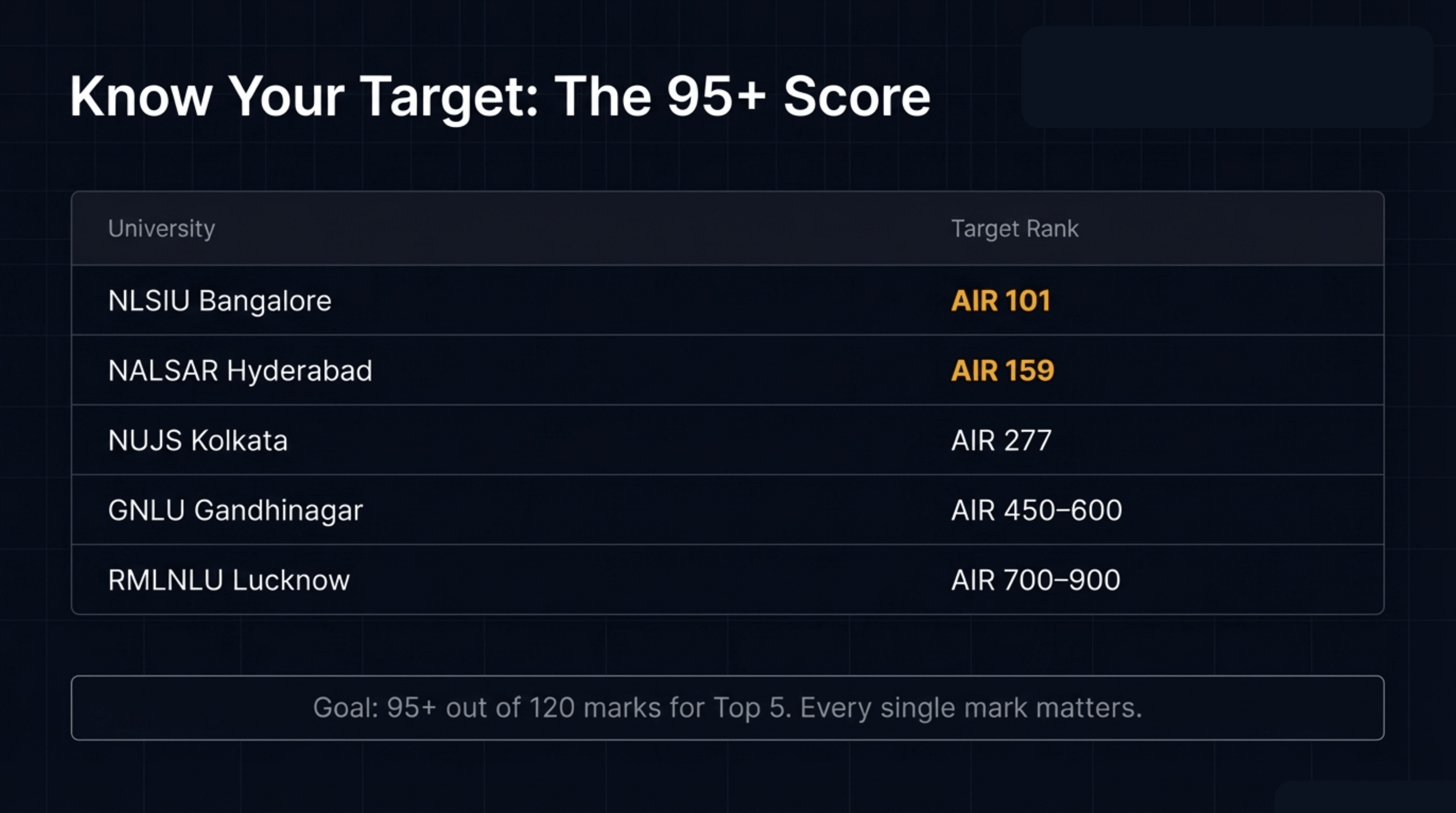
This is why you're preparing. Here's what CLAT 2026 Round 1 closing ranks looked like for the top NLUs (General category, BA LLB):
| NLU | CLAT 2026 Closing Rank (General, Round 1) |
|---|---|
| NLSIU Bangalore | AIR 101 |
| NALSAR Hyderabad | AIR 159 |
| NUJS Kolkata | AIR 277 |
| NLU Delhi (AILET — separate exam) | Separate entrance |
| GNLU Gandhinagar | AIR 450–600 |
| RMLNLU Lucknow | AIR 700–900 |
To break into the top 5 NLUs, you need a score of 95+ out of 120. For the top 10, 85+ is a competitive target. Every mark matters — and GK is where those extra 5–10 marks come from with the least effort, if you've been consistent.
5 Mistakes Students Make With Free CLAT Resources
Free resources work — but only if you avoid these traps:
1. Hoarding PDFs without reading them. Downloading 47 current affairs PDFs doesn't count as preparation. One curated capsule read daily beats a folder full of unread material.
2. Skipping previous year papers. These are the single most valuable free resource. The CLAT 2027 Starter Kit includes multiple past papers with detailed solutions — use them early, not just before the exam.
3. Ignoring GK until the last 2 months. GK is a daily habit, not a last-minute cram. Starting it now and doing 20 minutes a day will put you ahead of 80% of aspirants who leave it for November.
4. Watching too many YouTube videos. Passive watching feels productive but rarely is. Active practice — solving questions, writing summaries, testing yourself with flashcards — is what builds exam-ready skills.
5. Not tracking what you've covered. A simple checklist or study tracker prevents repeat work and ensures you're covering all five sections, not just your favourite ones.
FAQs: CLAT 2027 Free Resources
Is CLAT Tribe's Starter Kit really free?
Yes. The CLAT 2027 Starter Kit is completely free. It includes previous year papers with solutions, strategy guides, and access to CLAT Tribe's GK tools — designed to get you started without any financial commitment.
Can I crack CLAT 2027 without coaching?
Absolutely. CLAT tests comprehension and reasoning, not rote learning. Thousands of students score 100+ using free resources, self-study, and structured practice. The key is consistency and the right materials — not expensive classroom coaching.
When should I start CLAT 2027 preparation?
Now. The expected exam date is December 6, 2026. Whether you're in Class 10, 11, or 12, starting early gives you the advantage of building reading speed and GK knowledge over time. Even 2 hours a day is enough if you start 8+ months out.
How many marks does the GK section carry in CLAT?
The Current Affairs & GK section carries approximately 25% weightage — roughly 28–32 questions out of 120. Each question is worth 1 mark with −0.25 negative marking for wrong answers.
What is the best free resource for CLAT GK preparation?
CLAT Tribe's GK Capsules and Smart Flashcards are specifically built for CLAT — not generic current affairs. The CLAT GK Vault organises facts by exam-relevant categories. For daily practice, the capsules cover what's testable in under 30 minutes.
Are previous year papers enough for CLAT preparation?
They're essential, but not enough alone. Previous papers help you understand the pattern and difficulty level. Combine them with daily GK reading, legal reasoning practice, and regular mock tests for a complete preparation strategy.
What score do I need for a top NLU?
For the top 5 NLUs (NLSIU, NALSAR, NUJS), you need a score of 95+ out of 120, which translates to AIR under 300. For the top 10 NLUs, 85+ is a competitive target. The exact cutoffs vary by category and year.
Is there negative marking in CLAT 2027?
Yes. Each wrong answer deducts 0.25 marks. There's no penalty for unanswered questions, so strategic skipping is important — especially in sections where you're unsure.
Start Your CLAT 2027 Journey Today
Here's what you know now: CLAT 2027 is expected on December 6, 2026. You have roughly 8–9 months. The exam tests comprehension and reasoning — skills that improve with daily practice, not last-minute cramming. And the GK section (25% of your paper) is the fastest section to improve with the right system.
You don't need expensive coaching to begin. You need a structured starting point, the right free resources, and the discipline to show up daily.
CLAT Tribe's CLAT 2027 Starter Kit gives you that starting point — previous year papers, strategy frameworks, and access to India's most focused GK platform for CLAT. Built by the team behind IPMAT AIR 1 and AIR 7. Free. No strings.
Grab your free Starter Kit now → clattribe.com/clat-2027-starter-kit